Are they actually siblings?
Useful when two cats were adopted together or came from uncertain rescue circumstances.

For multi-cat households
Cats adopted together are often assumed to be siblings. Cats that look alike are often assumed to be related. In real households, those assumptions can be wrong. DNA testing helps multi-cat homes compare background, likely family connection, and ancestry overlap with more than guesswork.
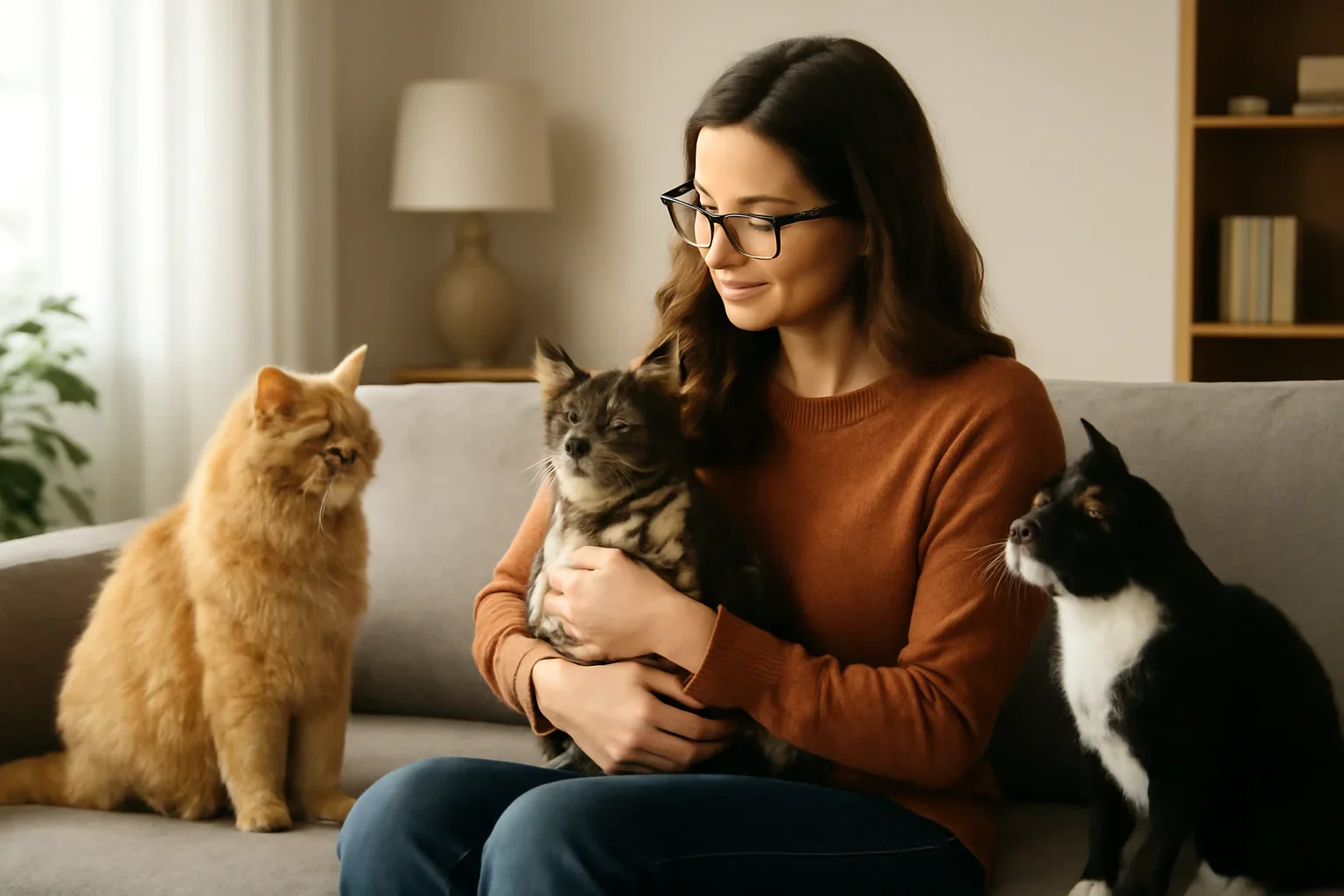
This use case is less about one cat in isolation and more about what two or more cats mean together.
Useful when two cats were adopted together or came from uncertain rescue circumstances.
Helpful when household cats look similar and owners want to know whether the resemblance is genetic or coincidental.
Important because mixed samples or unclear labelling can quickly derail a comparison order.
The value of a relatedness report drops quickly if the samples are not clearly separated from the start. For households testing two cats, organisation matters just as much as the report itself.
Before ordering, review ancestry and relatedness features and the article on siblings or relatives so you know what the final comparison can realistically tell you.

For multi-cat households pages should connect the decision, the sample process, and the kind of answer the household hopes to receive.


The strongest multi-cat orders are planned with comparison in mind from the first step.
You may not need to test every cat in the home if the main question only involves a specific pair.
Testing more than one cat requires calm handling, clear labels, and no cross-contact between swabs.
Relatedness findings are most useful when they are read alongside age, history, and visual observation rather than on their own.
These FAQs are written for households navigating for multi-cat households decisions, with clear answers instead of generic guidance.
Yes. DNA testing can still look for relationship strength and ancestry overlap even when the cats were not known to come from the same litter. The key is understanding that the result is about likelihood and degree of relatedness, not a simple yes-or-no label.
Only if that helps answer the actual question. Many households only need to compare two cats first, then decide whether broader testing is worth it later.
No. Genetics can influence tendencies, but daily routine, socialisation, age, and environment still shape behaviour. Relatedness explains background, not every personality difference.
After reading this for multi-cat households page, these links usually help narrow the report path further.
Tell us what is happening in your for multi-cat households situation and we will suggest the report route that best matches it.