Start with the main reason you ordered
That keeps you focused on the most relevant section instead of getting lost in every detail at once.

Results guide
DNA results are most useful when the report is clear and you know how to interpret each section. This guide walks through the practical meaning of breed, ancestry, health, and relatedness findings so the final report feels easier to use.

Most confusion disappears once the report is read section by section instead of as one big conclusion.
That keeps you focused on the most relevant section instead of getting lost in every detail at once.
These concepts overlap, but they do not mean the same thing and should not be read as if they do.
Those sections are useful, but they are also the easiest to overinterpret without context.
A breed section usually helps with identity context. An ancestry section broadens the lineage picture. Health-marker screening can highlight inherited-risk information, while relatedness looks at likely family connection between cats.
If any of those categories still feel blurry, step back into the feature pages or the relevant blog article before forcing a quick interpretation.
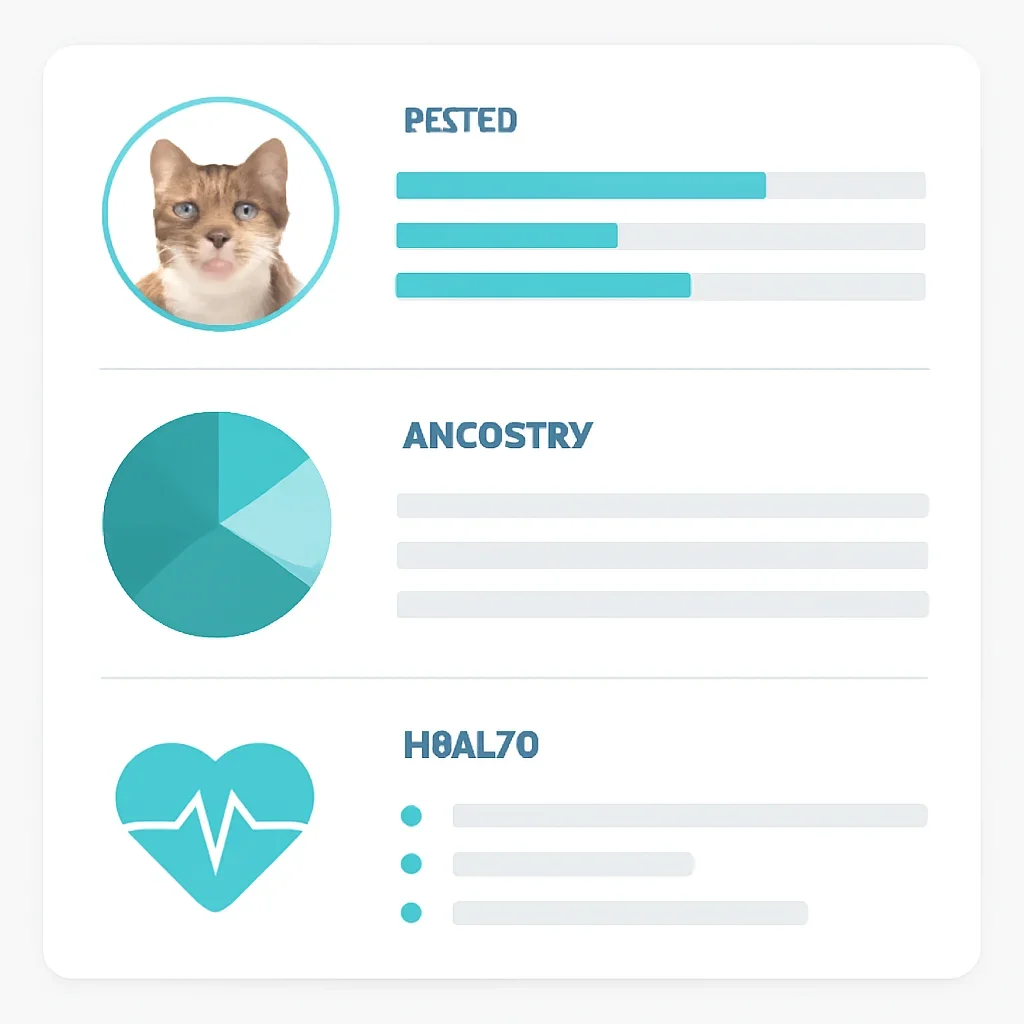
Results are easier to absorb when they are read slowly and compared to the original reason for testing.

These answers focus on practical interpretation rather than vague reassurance.
Mixed heritage is common, especially in household and rescue cats. DNA testing often replaces a simple visual assumption with a more layered but more honest picture of background.
Yes, if the report includes health screening and something seems relevant to future care conversations. The report is not a diagnosis, but it can provide useful context to discuss with your vet.
That happens more often than many owners expect, especially when the earlier story was based on appearance or incomplete records. Use the report as new evidence and then decide whether follow-up questions are worth asking.
Use the pages below if you want more context around a specific section of your report.
Share which section is confusing and we will help you understand what it is saying and where the limits still are.